
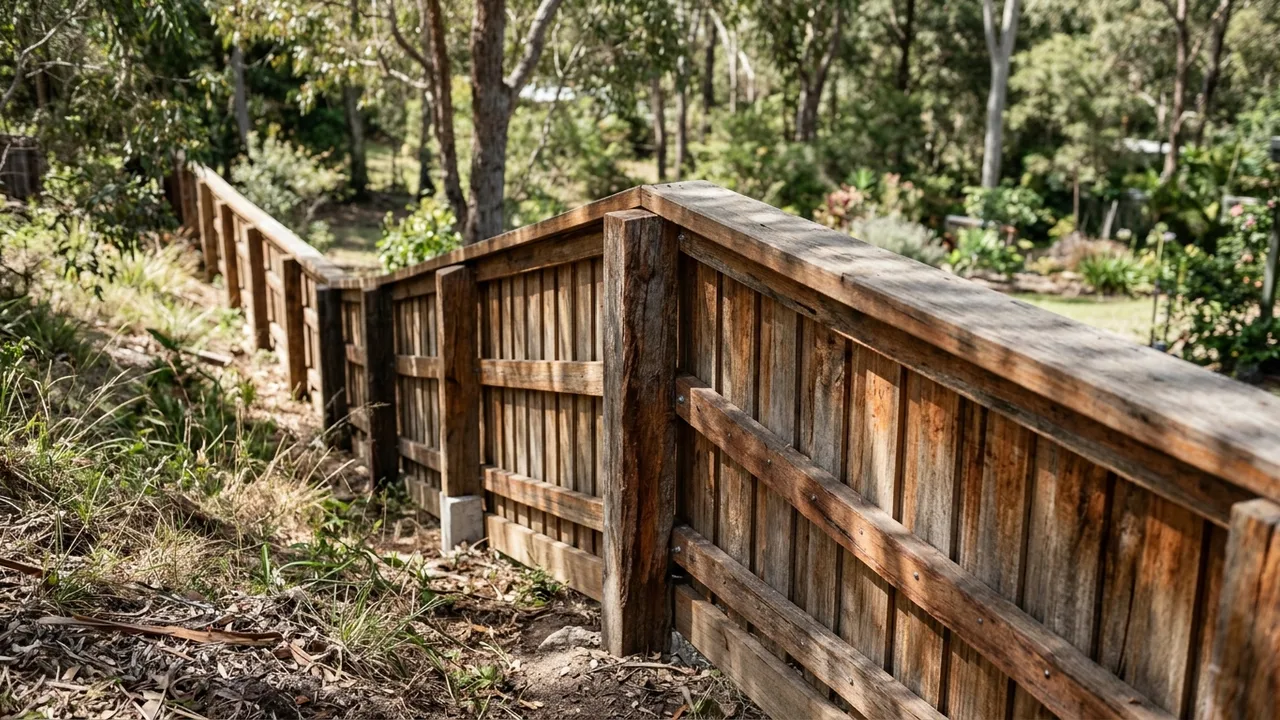
Timber Fencing Ipswich: Treated Pine and Hardwood Fences
Leaning palings or an open yard? A well-set timber fence gives you privacy and stays straight in Ipswich ground.
Timber fencing in Ipswich gives you a solid, private boundary when the right timber goes in the right place. Treated pine suits most backyard runs. Hardwood costs more and earns its keep where you want the fence to go the distance. Either way, the posts decide how long the fence stays straight.
Timber fencing Ipswich: treated pine or hardwood?
Treated pine is the usual pick for a backyard fence. It is lighter to work with, takes paint or stain well and costs less than hardwood. The treatment protects it against rot and termites, which matters on blocks where the ground stays damp and the weather is warm.
Hardwood is denser and naturally tough. It suits long runs, retaining-style fences on a slope, and anyone who wants a fence that will outlast a few wet seasons. It is harder to cut and fix, so labour is higher.
The right answer depends on the soil, the fall of the land and how long you plan to stay.
Why the posts matter most
Most leaning fences fail at the post, not the paling. Soil stays wet around the base, the timber softens at ground level and the fence tips over in the first big wind.
Posts that go into the ground should be treated for in-ground use, because timber meant for above ground rots there much sooner. Posts rated for soil contact and set to a proper depth make the biggest difference to how long the fence lasts.
Low-lying blocks near the Bremer River can stay wet after rain, so footings and drainage deserve extra thought.
Termites and Ipswich weather
Termites go for untreated timber, and a fence that touches the house or a garden bed can give them a path. Treated pine and many hardwoods resist attack far better than raw timber, though no timber is immune. Keep soil and mulch from piling against the palings, and keep the fence clear of the house wall where you can.
Timber also moves with the seasons. Heavy rain followed by hot dry weeks makes palings swell and shrink. Good fixing and a sealed or stained finish help the fence hold its shape.
What drives the cost of a timber fence
The length of the run is the biggest factor, followed by height, the type of timber and the number of gates. A sloping block, hard or rocky ground, tree roots and tight access all add labour.
Removing and carting away an old fence is a separate cost, and so is a retaining wall, which sloping blocks sometimes need before the fence goes in.
A written quote sets the agreed scope, though surprises underground can still change the job. A fencer who measures the site gives a far more reliable price than one who guesses from a phone call.
Sharing a boundary fence with a neighbour in QLD
In Queensland, neighbours generally split the cost of a sufficient dividing fence equally. Whoever wants something more, such as a taller fence or pricier material, pays the extra.
Talking to the neighbour before the fencer quotes saves arguments later. Agree on height, style and who pays what.
What to ask fencers before work starts
Before anyone digs a hole, ask three things. Who is doing the work, and do they hold the right licence for it? What does the quote cover? How much is asked up front?
A tradesperson should be happy to say what timber, post treatment and fixings they use. They should also say whether old fence removal and the gate are in the price. Be wary of a quote that is vague on any of these.
Pool fences are a different job. A pool barrier has to meet Queensland pool safety rules, so say so at the start.
Patch it or replace it?
Patching makes sense when only a few palings are loose and the posts are still sound. Push on a post. If it moves at the base or the timber crumbles, patching only delays the job.
A run with several rotten posts will keep failing section by section. Replacing the lot costs more now, but you stop paying for repeat repairs.
How it works
-
Measure up
The fencer walks the boundary, notes slope, trees, gates and the old fence, then measures the run.
-
Written quote
You get a price in writing that sets out the timber, height, gates and removal of the old fence.
-
Clear and mark out
The old fence comes out and post positions are marked so the line runs straight, including over any fall in the ground.
-
Set the posts
Posts go into dug holes and are set firmly, because the footing carries the whole fence.
-
Rails, palings and gate
Rails and palings go on once the posts are solid, then the gate is hung and checked for swing and latch.
Scope in detail
- Paling boundary fences Palings fixed to a rail frame give strong privacy between neighbours for the money.
- Closing in a yard for pets and kids No gaps under the palings and a self-closing gate keep a dog in and small children off the road.
- Gates and side access A gate hung on a heavy, braced post stays square and does not drag on the ground.
- Old fence removal Pulling out the old fence and taking it away leaves the yard clear for the new posts.
Timber Fencing options
- Treated pine fencing Pine posts, rails and palings treated against rot and termites, a practical choice for backyard and side boundaries.
- Hardwood fencing Dense hardwood posts and rails for long runs, sloping ground or a natural timber finish.
- Privacy screens and deck walls Slatted or lapped timber panels on a frame that block sightlines from a neighbouring window or shield a deck.
- Leaning or rotten fence replacement New posts, rails and palings in place of a run rotted at ground level, finished with a gate that closes properly.
Timber Fencing across Ipswich
Frequently Asked Questions
What does a timber fence installation cost in Ipswich?
What fencing supplies do I need for a timber backyard fence in Ipswich?
What timber rating should fence posts have in Ipswich?
Talk to a specialist
Fence leaning, gate sagging or a new yard to close in? Tell us what you need and get it sorted.
Share the details and we will help you take the next step with confidence.