
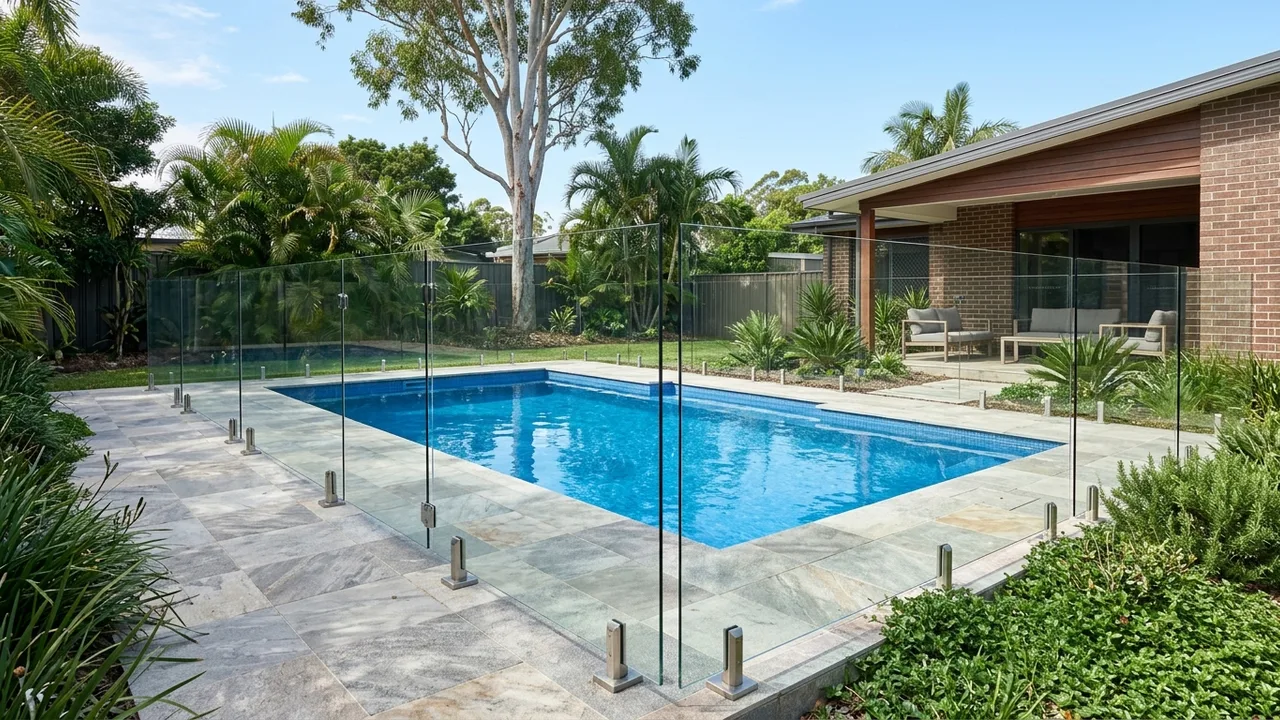
Pool Fencing Ipswich: Safe, Compliant Barriers
Pool fencing in Ipswich has to keep small children out and pass a pool safety inspection. A licensed fencer can build a barrier that does both.
A pool fence in Ipswich has to meet the Queensland pool barrier standard, so it is a job for a fencer who knows the measurements. Height, gaps, the gate latch and the clear space around the fence all count. Get one wrong and the pool fails its inspection, which is a costly thing to learn after the posts are set.
Pool fencing Ipswich: what a compliant barrier means
A compliant pool barrier is a fence that a licensed pool safety inspector can pass. In Queensland that means a height of 1200 mm or more and gaps of 100 mm or less. An outside latch release on the gate must sit 1500 mm or higher above the ground. There is also a 900 mm non-climbable zone, which is clear space around the barrier where a child could not get a foothold.
These measurements come from the pool safety standard under the Building Act 1975. A good fencer sets the whole job out around them, rather than building first and measuring later.
A pool fence keeps small children away from the water, and it does that only when every part of it works, including the gate.
Glass, aluminium or steel: choosing a pool fence material
Glass, aluminium and tubular steel are the three main choices, and Colorbond is sometimes used where a solid screen suits a section of the yard. Which one fits depends on what the fence is for and how the yard is used.
Glass keeps the pool visible from the house, which helps when you want to watch children in the water. It shows fingerprints and water spots, so it needs a wipe-down now and then.
Aluminium is light, does not rust and comes in several colours. Tubular steel is heavier and firm, which suits spots where the fence may be leaned on or bumped. The fencer confirms what suits your pool once the yard has been seen.
Queensland pool safety regulations: height, gaps and gates
Gaps cause the most trouble on sloping ground. A fence that looks fine at the top can leave a wider opening at the bottom where the soil falls away, and that gap has to stay within 100 mm. A barrier that is close but not within the Queensland pool safety regulations still fails.
Planter boxes, retaining walls, pool equipment and a neighbour's timber fence can all give a child a step up, so the fencer plans the barrier line to keep that space clear. The gate must close and latch on its own, every time.
Certification and approvals for a pool fence in QLD
A pool safety certificate is issued by a licensed pool safety inspector. It stays valid for 2 years on a pool that is not shared and 1 year on a shared pool. One is also needed when you sell or lease a property with a pool.
Building certification is a separate question for fences in general. A fence that goes over 2 metres above natural ground level needs it, and a fence sitting on a retaining wall is measured on the combined height. A pool barrier built on top of a retaining wall can reach that height, so a sloping block deserves a conversation before the fence goes in.
How Ipswich fencers run a pool fence job
The job starts with a visit to measure, because a pool fence cannot be priced properly from a phone call. The fencer looks at the slope, the soil, the distance from the house and where the gate needs to open.
In West Ipswich and Woodend, older timber homes and sloping blocks often mean retaining walls, steps and old boundary fences sit close to the pool, and each one changes where the barrier line can run. Where ground stays soft after rain, as it can on low flats near the Bremer River, the fencer checks the soil at the measure-up because it affects how posts are set.
After the quote is agreed, the old fence is removed, the new barrier goes in and the gate is fitted and adjusted. Once the barrier is finished, a licensed pool safety inspector checks it. The fencer can say at the quote stage whether booking that inspection is part of the job.
What drives the cost of a pool fence
The price moves with the material, the length of the barrier and the number of gates. Glass usually costs more than aluminium or tubular steel, partly because of the panels and the fittings.
A sloping block, rock under the surface or a barrier sitting on a retaining wall all add labour. A written price before work starts sets the agreed scope, though a surprise can still turn up once the old fence is out.
Pool inspection due, or a gate that won't latch by itself? Tell us about the pool and the slope of the yard. Photos of the pool area help the fencer see the tricky spots before the measure-up.
How it works
-
A measure-up on site
The fencer looks at the pool, the slope of the yard, where the house sits and how the gate will swing, then marks out the barrier line.
-
A written price
You get a quote for the chosen material and gate before anyone digs a post hole.
-
Removal and set-out
Any old fence comes out and the new post positions are set so heights and gaps stay within the limits.
-
Install and gate fit
Panels or bars go in, then the self-closing gate and latch are adjusted so the gate shuts and catches by itself.
-
Inspection
A licensed pool safety inspector checks the barrier and issues the pool safety certificate when it passes.
Scope in detail
- New pool barriers A new pool needs a fence planned around the minimum height and gap limits from the first post.
- Self-closing pool gates The gate is the moving part of the barrier, so the latch height and closing action matter most.
- Upgrades to old pool fences An older fence that no longer meets the standard can be altered or replaced before an inspection.
- Old fence removal Replacement work can include pulling out the old fence and taking it away, so the yard is left clean.
Pool Fencing options
- Glass pool fencing Clear glass panels keep the water in view from the house or deck, and they suit a yard where you want the pool to stay part of the outlook.
- Aluminium pool fencing Powder-coated bars come in a range of colours, so the fence can be matched to the house and the garden.
- Tubular steel pool fencing A heavier, firm barrier for spots where the fence is likely to be leaned on or bumped.
- Pool gates and latches Self-closing gates with a latch release set high enough to stay out of a small child's reach.
Pool Fencing across Ipswich
Frequently Asked Questions
What materials can be used for pool fencing in Ipswich?
When is building certification required for a fence around my pool?
What should I tell a fencer about what my pool fence is for?
Talk to a specialist
Fence leaning, gate sagging or a new yard to close in? Tell us what you need and get it sorted.
Share the details and we will help you take the next step with confidence.