
Rural Fencing Ipswich for Acreage and Paddocks
Slack wire, stock getting through or a new paddock to split? Say roughly how long the run is and what it has to hold, and a fencer who works acreage can call you back to walk the line.
Rural fencing in Ipswich covers the long runs that close in an acreage block, split a paddock or hold stock off a road. A fencer walks the line, measures it and gives you a written price before a post goes in the ground. The result is a straight fence that stays tight and a gate that swings where you want it.
Rural fencing Ipswich: acreage, paddocks and boundaries
If you have acreage past the edge of town, you want one fencer who understands long runs. A suburban backyard job and a paddock job are different work. Posts are further apart, wire is strained over long distances and the ground changes along the way.
Acreage fencing around Ipswich often means a mix of tasks in one visit: a new boundary on one side, a repaired section by the creek and a gate at the driveway. A fencer who looks at the whole block can price it as one job rather than three.
Which fence suits cattle, horses or dogs?
The right fence depends on what it has to hold. Cattle need strong strained wire and solid posts. Horses do better with a fence they can see, such as post and rail or wire with a visible top. Sheep, goats and dogs need mesh that stops them pushing through low.
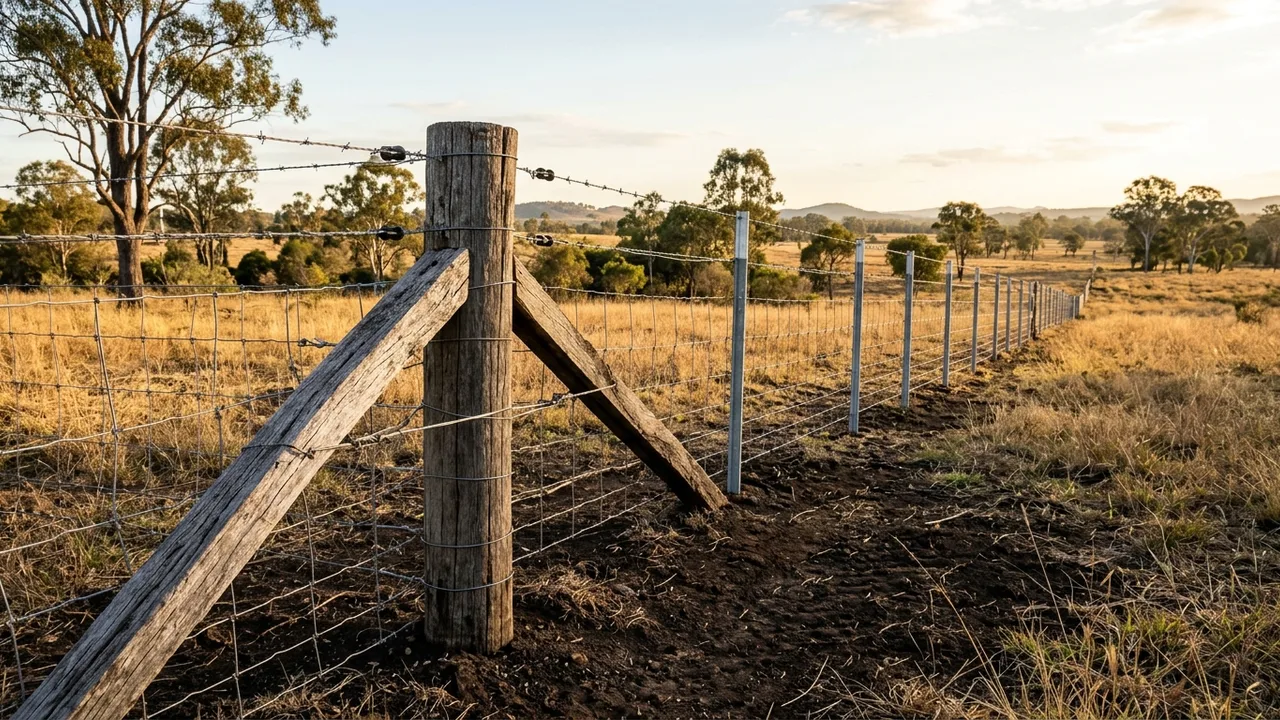
A strainer post is the heavy end or corner post that takes the pull of the wire. If it is undersized or poorly braced, the whole fence goes slack within a season. Good fencers spend their effort here.
Do rural fences need a licence in QLD?
Many rural jobs sit outside licensing. According to the QBCC fence builders guide (as at July 2026), a wire fence built from posts, pickets or stakes with no concrete footing needs no licence, whatever the value. Fences on agricultural or pastoral land are exempt as well, at any value.
That does not make every job a casual one. Fences with concrete footings, retaining walls or pool barriers on a rural-residential lot are different. A fencer will tell you which rules apply to your block when they see it.
What drives the cost of a paddock fence
Length is the biggest factor, followed by the type of fence. Strained wire costs less per metre than mesh or timber rail, and steel posts price differently to hardwood.
Ground matters too. Rock, heavy clay and wet flats along the river slow post driving and can need deeper or wider holes. Steep country adds extra bracing. Clearing a fence line of regrowth, and removing the old fence, are separate items that should be written into the quote. A written price sets the agreed scope, though hidden rock or buried debris can still change a job once digging starts.
Patch the old wire or replace the run?
Patching makes sense when posts are sound and only a few spans are slack or broken. Re-straining wire on solid posts is cheap and quick.
Replacement is the better call when posts are rotten at the base, wire is rusted through or the fence has been repaired many times already. Throwing more money at a failing line often costs more over a few years than starting fresh. The fencer can tell by pushing on the posts and checking the wire on site.
Fencers outside the suburbs and barbed wire
Rural fencers travel to acreage on the Ipswich fringe, not just the town streets. Distance from town, a steep or boggy approach and the room a post driver needs on wet ground all show up in the quote, so a creek crossing or a soft paddock is worth mentioning early.
Barbed wire is worth raising too, particularly along a road or beside a neighbour's house paddock. The fencer can say where plain wire or mesh is the better choice once they have walked the line.
How it works
-
Walk the line
The fencer visits the block, looks at the boundary, the slope and the soil, and measures the full run.
-
Written price
You receive a quote that sets out the fence type, gate positions and whether the old fence comes out.
-
Strainers and posts
End and corner posts go in first and are braced, because they hold the tension for the whole line.
-
Wire, gates and clean-up
Wire or mesh is strained and fixed, gates are hung and old material is removed from the paddock.
Scope in detail
- Boundary fencing on acreage A long perimeter keeps stock in and neighbours' stock out, so the line needs to be straight and strong at every corner.
- Paddock subdivision Cross fences let you rest grass and separate horses, cattle or sheep without building a full yard.
- Gates and entries A gate that drags or sags becomes a daily nuisance, so hanging posts need to be set deep and braced.
- Old wire and post replacement Rotten posts and slack wire can be stripped out and the old material taken away.
- Fencing for dogs and small stock Rural-residential blocks often need a tighter mesh near the house so pets stay in.
Rural and Acreage Fencing options
- Post and wire stock fencing Strained plain wire on timber or steel posts for cattle, horses and sheep across open paddocks.
- Rural mesh and ringlock Woven mesh that holds smaller stock and dogs, used along boundaries and around house paddocks.
- Timber post and rail A solid, tidy look for front boundaries and horse paddocks where appearance counts.
- Farm gates and strainer assemblies Heavy gates and braced end posts that carry the load of a long wire run.
Rural and Acreage Fencing across Ipswich
Frequently Asked Questions
How long does rural fencing take on an acreage block near Ipswich?
Is barbed wire allowed for rural fencing around Ipswich?
How do I pick a fencer for a long acreage boundary near Ipswich?
Talk to a specialist
Fence leaning, gate sagging or a new yard to close in? Tell us what you need and get it sorted.
Share the details and we will help you take the next step with confidence.