
Fencing Basin Pocket: Wet-Weather Repairs and New Fences
Palings loose, posts rotten or a gate dragging after the river came up? A local fencer can price the repair or the replacement in writing before work starts.
Fencing in Basin Pocket takes a beating from the water. When the Bremer River rises, wet ground softens around posts, palings swell and gates drop out of line. A local fencer can tell you whether a leaning run needs a few new posts or a full replacement, and put the price on paper first. Say which fence has moved, roughly how long the run is and whether the posts still feel firm.
Fencing Basin Pocket: wet-weather repairs and replacements
Wet weather does the same damage to most timber fences. Water sits at the base of each post, the wood rots below ground, and the fence leans a little more with every storm. Palings, the upright boards, cup, split and pull away from their rails.
Three jobs cover most of what a yard needs. A repair swaps rotten posts and loose palings and straightens what is still sound. A replacement pulls out the whole run and builds a new one. A new fence closes in a yard with no boundary at all, which is the fix when the dog keeps getting out.
The fencer confirms which job it is once they have seen the fence on site. A leaning panel on firm posts is a small fix. A post you can push over with one hand has usually rotted at the base, and patching around it tends to mean paying twice.
When the old fence comes out, it should be taken away rather than left stacked in your yard.
Should I patch the old fence or replace it?
Patch it when the posts are firm and only a few palings or a rail have failed. Replace it when several posts have gone soft, because new palings on rotten posts will lean again after the next wet season.
Cost is the usual worry, and a written quote answers it. It sets the agreed scope and price before anyone digs a post hole. Repair and replacement priced side by side make the choice a matter of real numbers.
Deposits are worth settling in the quote itself, not on the day work begins.
Which fencing in Ipswich QLD copes with wet ground?
Every fence material reacts to damp ground differently, so the choice matters on low land.
Colorbond steel does not rot and gives solid privacy from the street. Aluminium slat fencing suits a front boundary where you want a clean look and some airflow. Timber suits older cottages and costs less to start, but its posts are the part that fails first in soggy soil, so they need good footings. Rural runs and pool barriers are separate jobs again.
A pool barrier must meet Queensland pool safety rules, so that work belongs with a fencer who builds them regularly. If your block slopes, a retaining wall may need to go in before any fence does, because a fence built on shifting soil will not stay straight.
Queensland also has rules for dividing fences, which cover how neighbours share a boundary fence. Talk to the neighbour first, then get the quote.
Housing and ground conditions in Basin Pocket
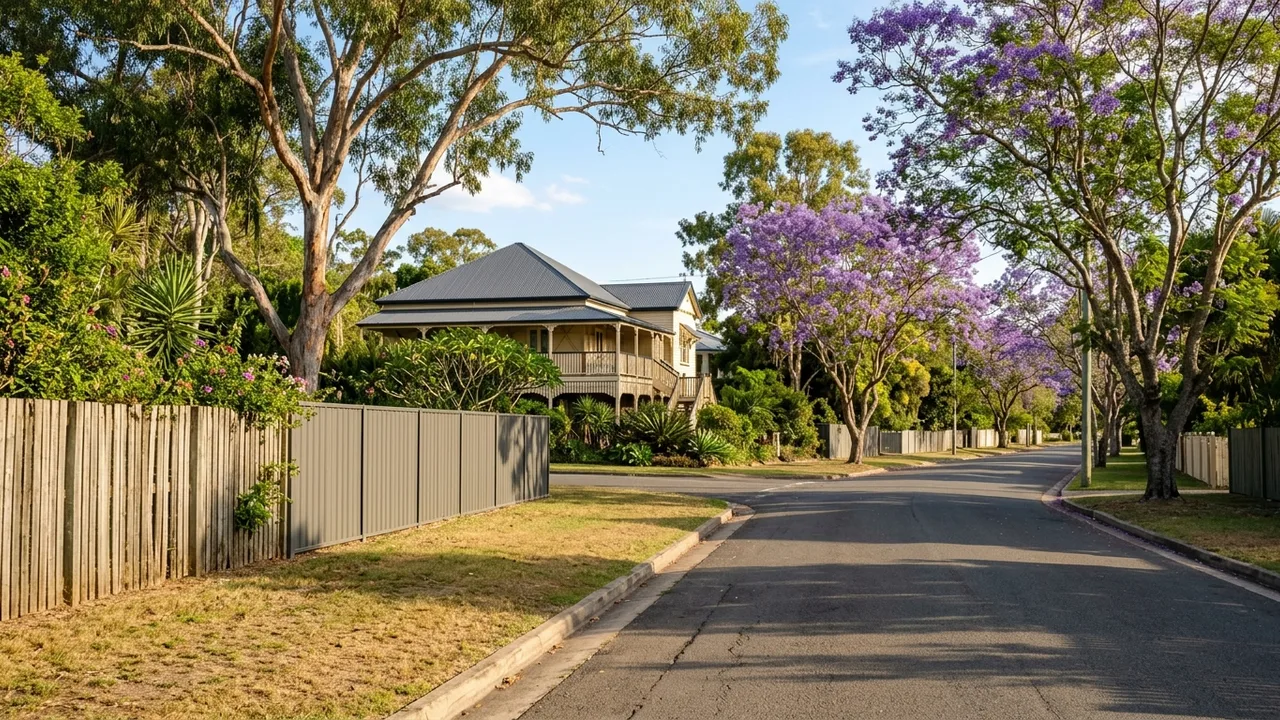
The Bremer River wraps around Basin Pocket, and East Ipswich is the stretch of land that joins it to the rest of the city. Steamers once turned in the river basin that gave the suburb its name. The area is leafy, but it is a flood-prone pocket. For a fence, that means low ground that stays wet and posts that sit in damp soil for long stretches.
The streets are few, yet the houses vary a great deal. Workers' cottages from the late 1800s and early 1900s stand near timber homes from the interwar and post-war years. Beside them are houses from the 1960s and 1970s, later brick homes and new infill. An old paling fence on a cottage block may be shared with a neighbour, so a replacement is often a conversation about splitting the cost.
From the parkland at Cribb Park to the Davidson Street ferry, the suburb is a small place with the river close on every side. The nearer a block sits to the Bremer River, the more likely the ground stays wet. Fences on wetter ground suit posts set deep and materials that tolerate damp. On drier ground the choice comes down more to privacy, pets and budget.
A fencer who knows these older blocks will measure up, spot where the water sits and price the work to suit.
Services in Basin Pocket
- Decking Timber decks that stretch your living space outdoors, planned alongside new fencing for a finished backyard.
- Colorbond Fencing Pre-painted steel panels, set level on flat ground or stepped down a sloping yard to follow the fall.
- Timber Fencing Treated pine and hardwood fences for privacy between neighbours, with posts built for local soil.
- Pool Fencing Glass, aluminium or tubular pool barriers built to keep small children out and meet Queensland rules.
- Aluminium and Slat Fencing Powder coated aluminium slat fences that will not rot or draw termites, with modern privacy screening.
- Rural and Acreage Fencing Long boundary and paddock runs on acreage, built to hold stock and keep your fence lines straight and tight.
- Retaining Walls Sleeper and timber retaining walls that turn a sloping block into level, usable yard and a firm fence base.
- Fence Repairs and Replacement Leaning posts, loose palings and sagging gates fixed, or the old fence pulled out, taken away and replaced.
Frequently Asked Questions
What are the common fence problems in Basin Pocket and how are they fixed?
Talk to a specialist
Fence leaning, gate sagging or a new yard to close in? Tell us what you need and get it sorted.
Share the details and we will help you take the next step with confidence.