
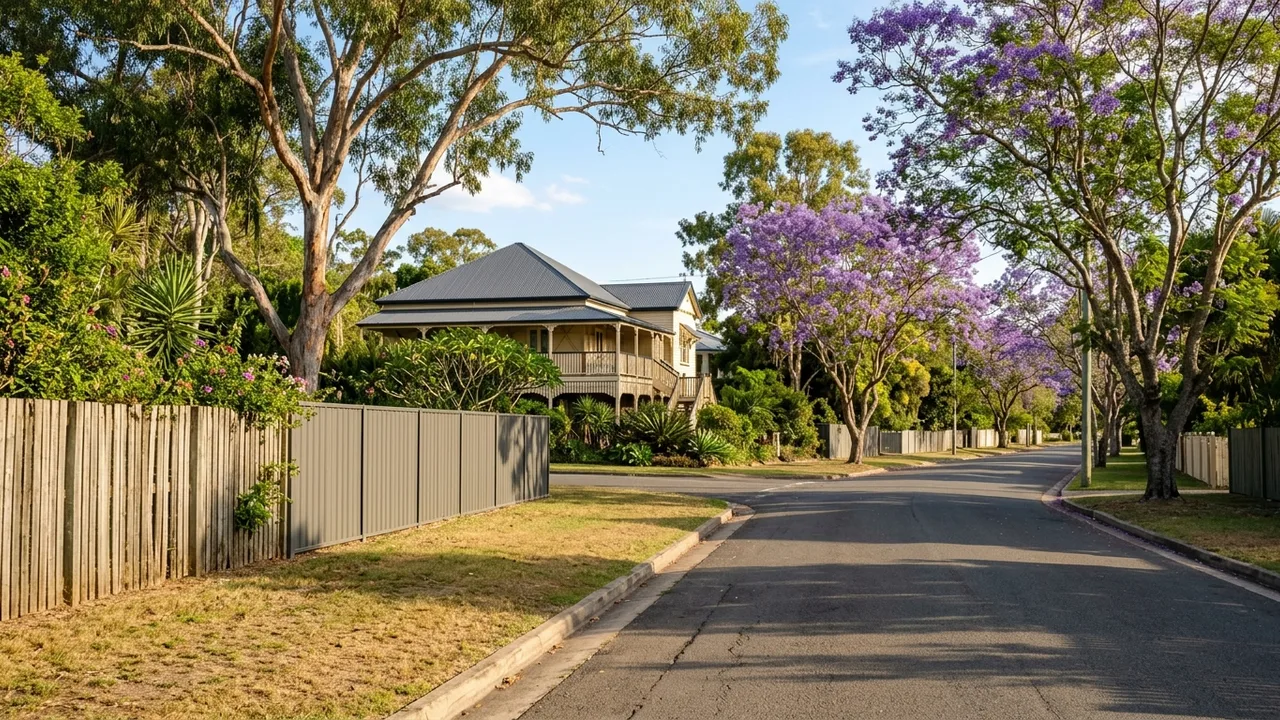
Fencing Woodend: Fences That Suit Older Homes
Leaning palings, rotten posts or a yard that needs closing in? Woodend fencing works best when the fence suits an older home, and a local fencer can price it in writing.
A Woodend fence usually sits beside an older timber home, so the right one has to hold up and still look at home next to the verandah. A local fencer measures the boundary, talks through the options and puts a price on paper before any post goes in.
Fencing Woodend: timber, Colorbond and pool fences
Four fence types cover most Woodend yards. Timber paling suits an older home and is the easiest to match to what is already there. Colorbond steel gives a straight, low-maintenance panel and strong privacy. Aluminium slat looks neat at the front and works well for gates. Pool barriers have their own job, which is keeping small children out of the water.
A pool fence has to meet Queensland pool safety rules, so the gate, the latch and the gaps matter as much as the height. A fencer who builds pool barriers will work to those rules from the start.
If the yard is only half closed in, say a dog finds the gap near the side gate, a short run of new fence can fix it without redoing the whole boundary.
Can a new fence suit a character home?
Yes. A new fence can sit well beside a character home if the style, height and colour are chosen with the house in mind. Timber palings with a capped top rail are a natural fit for an older Queenslander. Colorbond works in a soft heritage-style colour along the back and side boundaries, where privacy matters more than looks.
A good fencer will often suggest mixing the two: timber at the street front where people see it, steel along the sides where you want a long, solid run.
Where an old fence is leaning after a wet season, the problem is usually the posts. Rotten or loose posts mean patching the palings only buys a little time. A fencer can look at the post bases on site and tell you whether a repair is worth it or a replacement makes more sense.
Boundary fencing in Ipswich: who pays when a neighbour shares it?
When the fence sits on the line between you and a neighbour, Queensland's dividing fence law generally expects you to share the cost of a basic fence. If one side wants something taller or fancier, that side usually covers the extra.
The simplest way to start is a written quote. It gives you and the neighbour the same price for the same fence, so the conversation is about a real number and not a guess.
On a sloping block, a retaining wall may need to go in before the fence. The wall holds the soil back and gives the fence a level, stable footing. A fencer will say if your ground needs one when they measure up.
What happens to the old fence?
A replacement job can include pulling out the old fence and taking it away, so you are not left with a pile of rotten palings and posts in the yard. Mention it when you ask for a quote, along with any slope in the block, so both are priced in from the start.
A fixed written price sets the agreed scope. Surprises can still turn up once the old fence is out, such as a buried footing or a hidden stump, and a good fencer will tell you straight away if the job changes.
A licensed contractor should be able to give you their licence number, so ask for it with your quote.
Woodend streets, heritage and the Bremer River
Woodend has older homes, character housing in parts and leafy streets, so many yards have mature trees close to the boundary. Roots and falling branches can push on a fence over time, and a fencer will allow for them when setting post positions.
Several heritage precincts sit in the suburb, and the earliest goes back to the 1840s. Near St Mary's Church and the other historic buildings, people tend to want a fence that respects the look of the street. Plain timber or a muted steel colour usually sits better than anything loud.
The ground changes as you move through the suburb. Grammar School Hill stands 50 metres above sea level and is home to Ipswich Grammar School, so blocks near it can slope enough to need stepped fence panels or a retaining wall. Closer to the Bremer River, which wraps around the northern and eastern sides of Woodend, flatter ground can stay damp after heavy rain. That is hard on timber posts, so a fencer may suggest treated posts set in concrete, or steel posts, for those yards.
Services in Woodend
- Pool Fencing Glass, aluminium or tubular pool barriers built to keep small children out and meet Queensland rules.
- Aluminium and Slat Fencing Powder coated aluminium slat fences that will not rot or draw termites, with modern privacy screening.
- Rural and Acreage Fencing Long boundary and paddock runs on acreage, built to hold stock and keep your fence lines straight and tight.
- Retaining Walls Sleeper and timber retaining walls that turn a sloping block into level, usable yard and a firm fence base.
- Fence Repairs and Replacement Leaning posts, loose palings and sagging gates fixed, or the old fence pulled out, taken away and replaced.
- Decking Timber decks that stretch your living space outdoors, planned alongside new fencing for a finished backyard.
- Colorbond Fencing Pre-painted steel panels, set level on flat ground or stepped down a sloping yard to follow the fall.
- Timber Fencing Treated pine and hardwood fences for privacy between neighbours, with posts built for local soil.
Frequently Asked Questions
Do I need building approval for a fence at my Woodend home?
Talk to a specialist
Fence leaning, gate sagging or a new yard to close in? Tell us what you need and get it sorted.
Share the details and we will help you take the next step with confidence.