
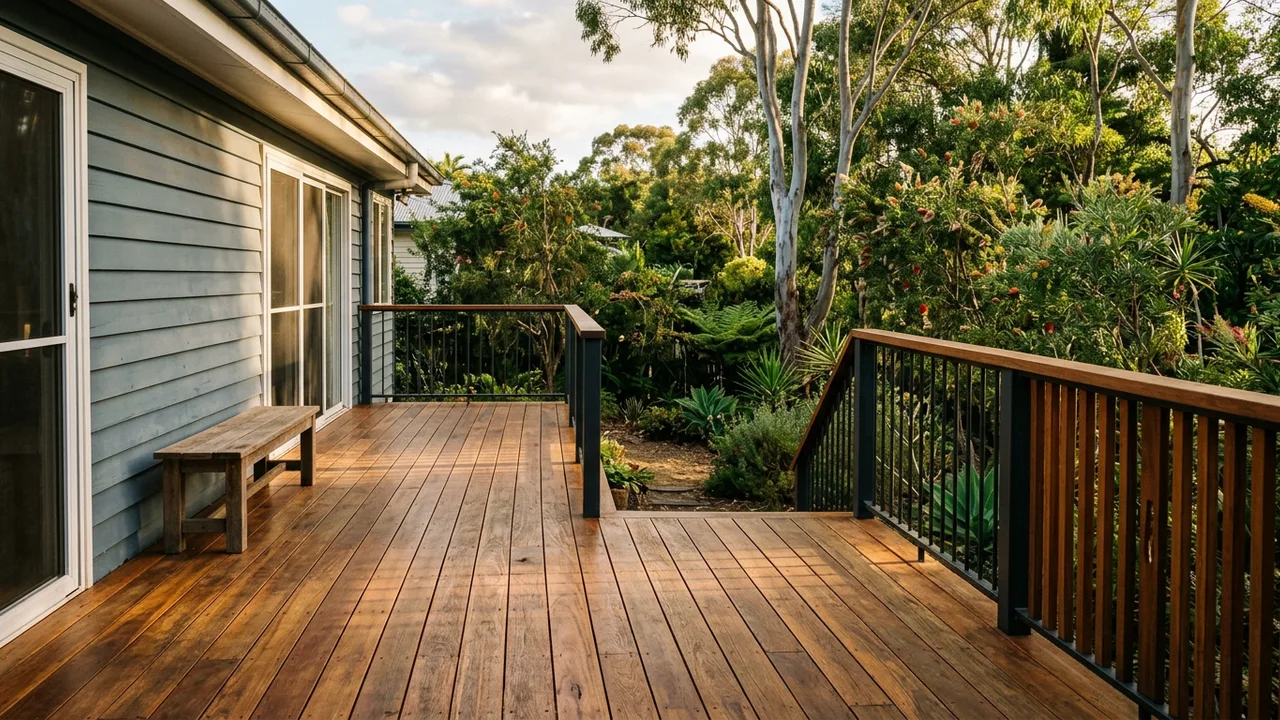
Decking Ipswich: Timber Decks Built Alongside Your Fence
Putting in a new fence and want a deck too? Get the levels wrong and the fence gets cut down or a gate will not open, so decking in Ipswich works best planned with the fence.
Yes, a deck can go in at the same time as a new fence, and it usually works better that way. A deck sits close to the boundary, the gate and the back door, so the fence height, the deck height and the paths between them all affect each other. Planning them together means one set of measurements and one finished backyard instead of two jobs that clash.
Decking Ipswich: why plan it with the fence
A deck and a fence share the same patch of ground. If the fence goes up first, the deck builder may have to work around posts, rails and a gate swing that were never set out with a deck in mind. If the deck goes first, the fence has to be cut or stepped to suit it.
Doing both together lets the builder fix the finished ground level once. That decides how high the deck sits against the boundary, whether neighbours can see over the rail, and where a gate opens.
Privacy is the other reason. A raised deck lifts you closer to the top of a standard fence, so the fence height you pick may need to change to keep the screening you wanted.
Timber or composite boards?
Timber is the usual choice for a deck that sits beside a timber or Colorbond fence. It is warm underfoot, easy to cut around odd corners and simple to repair one board at a time.
Timber needs regular oiling or sealing, especially where the afternoon sun hits it. Left alone, it greys, cracks and eventually softens. Composite boards, made from timber fibre and plastic, need less upkeep but cost more up front and can run hot in full sun.
Your builder can show you board samples and explain how each one handles Ipswich summers. The right pick depends on how much time you want to spend on maintenance.
Decks on older homes and river flats
If your home sits on stumps with a raised floor, a deck off the back door often starts from a step down. Getting the deck level right with the floor matters, because a lip at the door is a trip hazard.
Low-lying blocks, such as those near the Bremer River, can stay damp after heavy rain. Timber that sits close to wet soil rots sooner, so the builder will look at drainage, airflow under the frame and how far the boards sit above the ground.
Sloping blocks add another step. A retaining wall may be needed before either the deck or fence goes in, and it is better built first than squeezed in afterwards.
What decides the price of a deck
Deck size is the biggest driver, followed by the height off the ground. A low deck on level ground is a much simpler job than a raised one with stairs and rails on a slope.
Board type, footings, handrails, stairs and any retaining all add to the total. Removing an old deck or fence adds labour too, though it leaves you with a clear site.
A written quote sets the agreed scope. It does not rule out a surprise such as soft ground or a buried obstacle, so a good builder tells you what could change the price before starting.
Approvals and rules for decks in Ipswich QLD
Whether a deck needs building approval from a certifier, or council input on where it sits, depends on its height, size and position on the block. A low, small deck is treated differently from a large raised one near a boundary.
A qualified builder knows what applies to your block and will say so at the quote stage. Overlays, which are extra planning controls on certain land such as flood-prone or character areas, can also affect what you can build.
If the deck sits near a pool, the pool barrier rules apply to it too.
Fencing Ipswich QLD: getting deck and fence quotes that agree
One contractor measuring the yard for both jobs gives the cleanest quote. A quote built from a phone photo misses the slope, the soil and the back door height. If your deck needs a builder with a different licence from your fencer, get both to work from the same finished ground level and gate positions so their quotes match.
Licensed builders should carry out the regulated work. Your old fence and any old decking should be priced to be taken away, not left in the yard.
Who pays for a shared boundary fence is a separate matter. A neighbour may share the fence cost, but a deck on your side is your own.
Soft deck boards, a wobbly rail, or a new deck to plan with your fence? Tell us the yard size, the slope and where the back door sits.
Mistakes to avoid with a new deck
Building the deck before the fence is settled is the common one. It can leave a fence that has to be cut down, stepped or moved.
Skimping on footings is another. A deck is only as steady as what it stands on, and soft ground needs deeper or wider support.
Forgetting about water is a third. Boards laid with no gap or no airflow underneath hold moisture and rot early. Tell the builder where the downpipes and low spots are, and they can plan around them.
How it works
-
Walk the yard
The builder looks at the back door height, the fall of the ground, the fence line and where the sun and rain hit.
-
Agree the layout
Deck size, board direction, steps, rails and gate positions are settled alongside the fence plan.
-
Get a written quote
You see the price and scope on paper before anyone digs a post hole.
-
Clear and build
Old fencing or rotten boards come out, then footings, frame, decking and fence go in.
-
Final walk-through
You look over the finished deck, rails and gates with the builder and point out anything you want adjusted.
Scope in detail
- Timber decks off the back door A deck level with the house floor gives you an outdoor room you can step straight into.
- Decks beside a new fence line The fence and deck edge are set out together, so there are no awkward gaps or boards cut around posts.
- Raised decks on sloping blocks A deck can level out a fall in the yard, sometimes with a retaining wall holding the high side.
- Steps, handrails and gate access Safe entry and exit points are worked out before building so the deck does not block a gate or side path.
Decking options
- Timber decking Boards fixed over a timber frame, in a species and finish chosen for sun, rain and foot traffic.
- Deck and fence planned together Levels, gates and privacy worked out on one site visit, even if a separate licensed deck builder quotes the deck.
- Deck repairs and board replacement Replacing soft boards, loose rails and failing posts on an existing deck.
Frequently Asked Questions
How do I check a decking and fencing contractor's licence in Ipswich?
Can a deck builder show examples of similar projects in Ipswich?
Does a home warranty cover a new deck or fence?
Talk to a specialist
Fence leaning, gate sagging or a new yard to close in? Tell us what you need and get it sorted.
Share the details and we will help you take the next step with confidence.